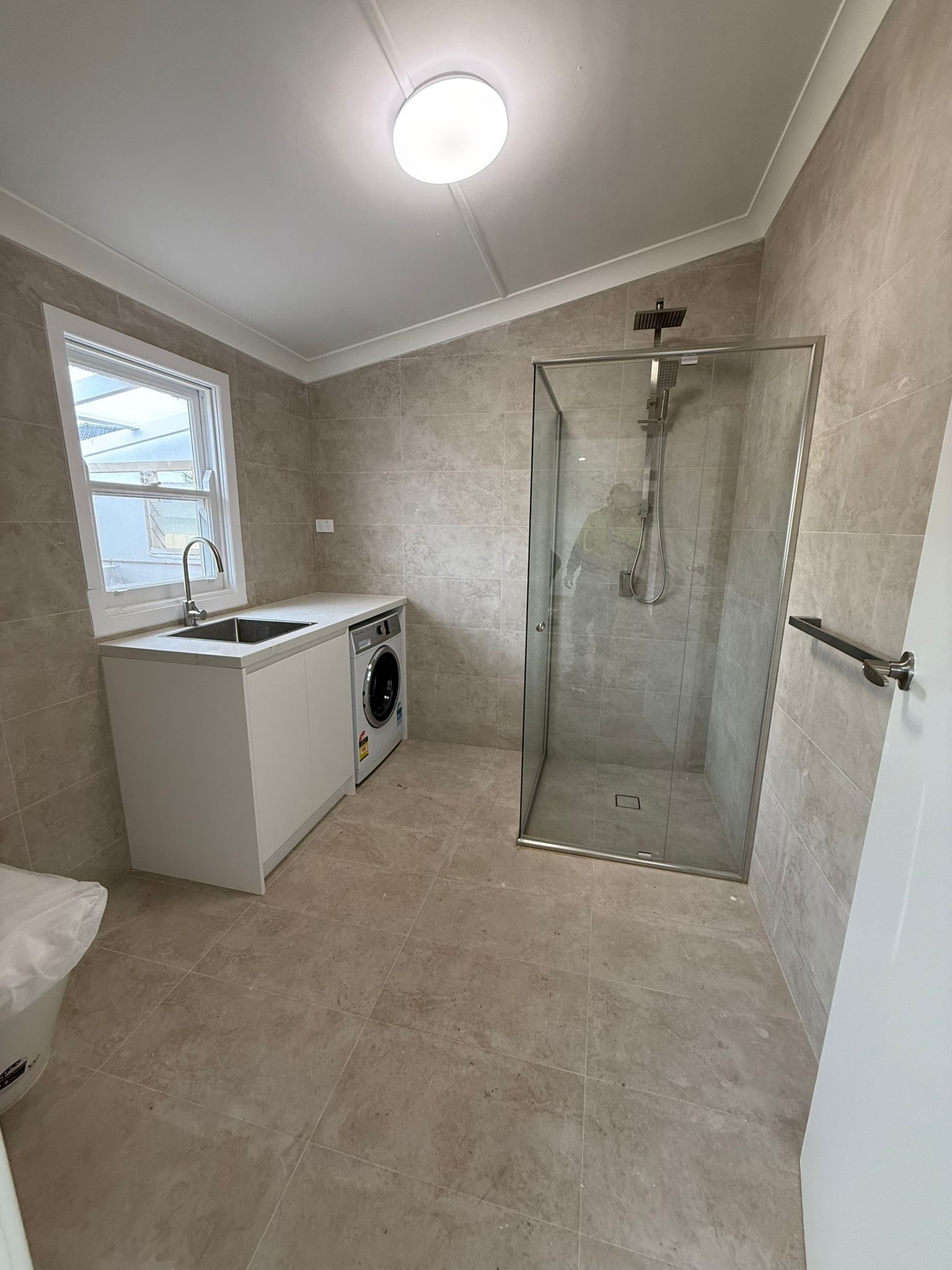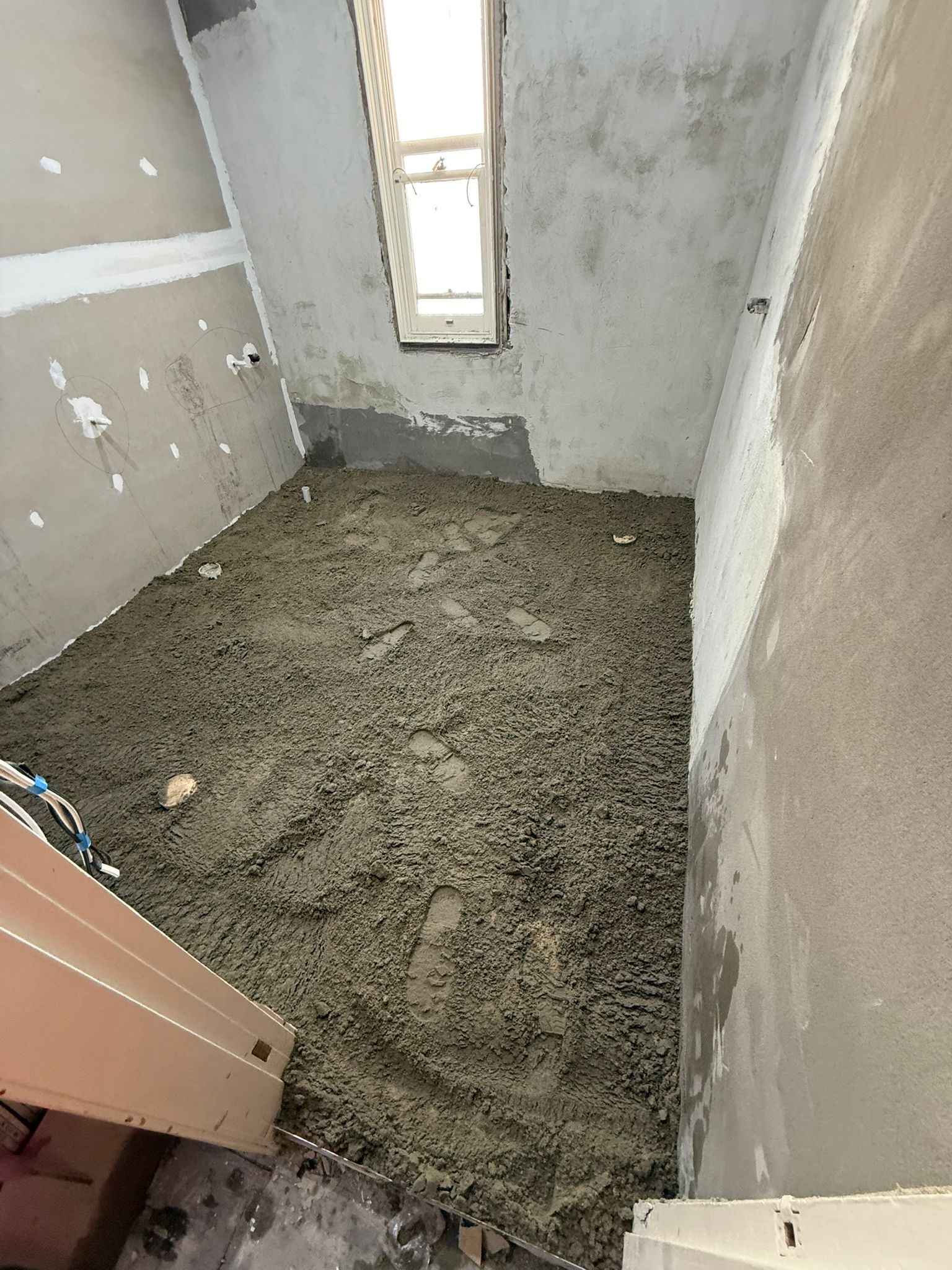
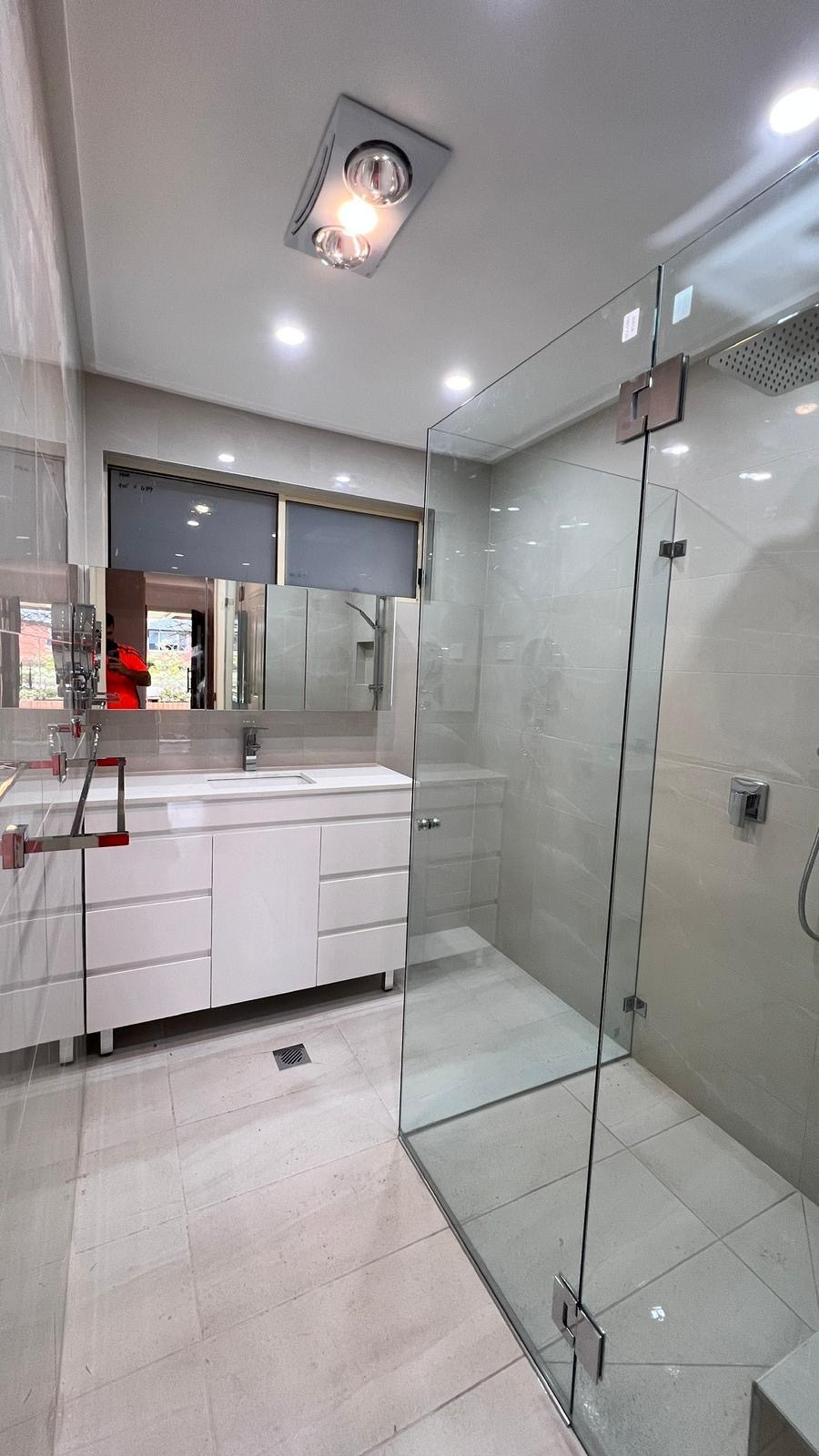
Bathroom tiles set the tone of the room and also do a practical job in wet areas. Format, colour and layout change how large the space feels, while slip resistance, grout and detailing decide how the surfaces perform day to day. These bathroom tile ideas focus on choices that work in real Sydney homes, not only in inspiration photos.
Choosing Tile Format and Size
Large format tiles reduce grout lines and can make walls and floors read as calmer planes. That helps many bathrooms feel larger and less busy. They do need flatter substrates and careful handling, especially on floors where falls still have to reach the waste.
Standard formats remain a practical middle ground for many renovations. They are familiar to set, suit a wide range of layouts and still look considered when the palette stays restrained. Mosaics and small formats earn their place on shower floors that need more fall, in niches, or as a limited feature band rather than covering every surface.
Mixing too many sizes in one room usually fragments the space. Pick a primary field tile, then use a secondary format only where it solves a functional or accent need. That discipline is one of the simplest bathroom tile ideas to apply and one of the most effective.
Floor vs Wall Tiles
Floor tiles need suitable slip resistance for wet bare feet, especially in the shower and on the main bathroom floor. Wall tiles prioritise cleanability and visual continuity; they do not carry the same underfoot demands. Using the same look across floor and wall can unify the room, but check that the floor product is actually rated for wet floor use.
Carrying one tile from floor up the wall, or matching tones closely, reduces visual breaks and helps compact bathrooms feel larger. Contrasting floor and wall tiles can still work when the contrast is intentional and limited, rather than three competing textures fighting for attention.
In wet areas, falls and waste position influence floor format as much as style. A large tile that looks perfect on a flat display board may need more cuts or a different layout once falls are drawn. Resolve drainage and tile size together before you lock the order.
Colour, Feature Walls and Continuity
A consistent palette holds a bathroom together. One main field colour, a complementary floor and a restrained accent usually age better than packing every wall with pattern. Light neutrals bounce light in darker Sydney apartments; deeper tones can look rich when lighting is layered and the rest of the room stays calm.
Feature walls work best when they highlight one zone, such as the vanity backdrop or the shower end wall. If every elevation becomes a feature, nothing reads as the focus and the room feels busy. Keep grout colour close to the tile when you want continuity; contrast grout only when you want the grid to show.
Colour also changes perceived space. Continuous light tones stretch the room; strong horizontal bands or busy mosaics can shorten it. View samples in your actual bathroom light before you commit, including at night under the lighting you plan to install.
For broader planning beyond tiles, see our bathroom renovation ideas guide at /blog/bathroom/bathroom-renovation-ideas/.
Practical Choices for Wet Areas
Near the shower, choose surfaces that handle frequent wetting and cleaning without absorbing stains into open textures. Rectified edges and consistent joints help large formats look sharp, while epoxy or quality cementitious grouts need a maintenance plan that suits how hard the household is on the room.
Grout and silicone are part of the tile idea, not an afterthought. Colour-matched silicone at junctions and a grout that suits wet zones keep the finish looking intentional after the first year of use. Recaulking and gentle cleaning protect the look more than aggressive scrubbing that wears the joints.
Mosaics remain useful where falls are steep or curves and niches need small pieces. Use them as a functional tool in the shower floor or niche, then return to larger formats on the main walls so the wet zone stays coherent rather than fully mosaic-clad unless that is the deliberate design.
Key Takeaways
- Large formats calm a room; mosaics suit falls, niches and limited accents.
- Floor tiles need wet-area slip performance; walls prioritise continuity and cleaning.
- One feature wall and a consistent palette usually outperform competing patterns.
- Plan tile format together with falls and waste position in the shower.
- Grout and silicone choices affect how the tiling looks after daily use.
Frequently Asked Questions
Ready for your kitchen renovation?
Get a free quote and practical guidance from Reno Right for your Sydney kitchen project.
Related Posts