Choosing between a custom kitchen and a flat pack kitchen is really a decision about fit, flexibility and how much your room fights standard sizes. This guide compares both paths so you can decide when modular kits are enough and when bespoke cabinetry is the smarter investment.
What Flat Pack Kitchens Do Well
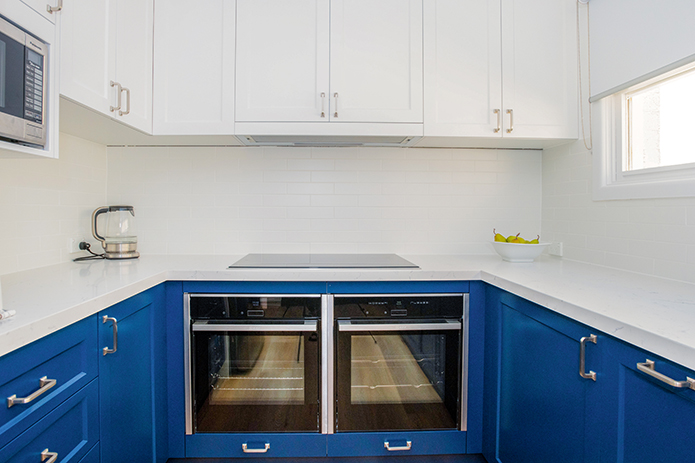
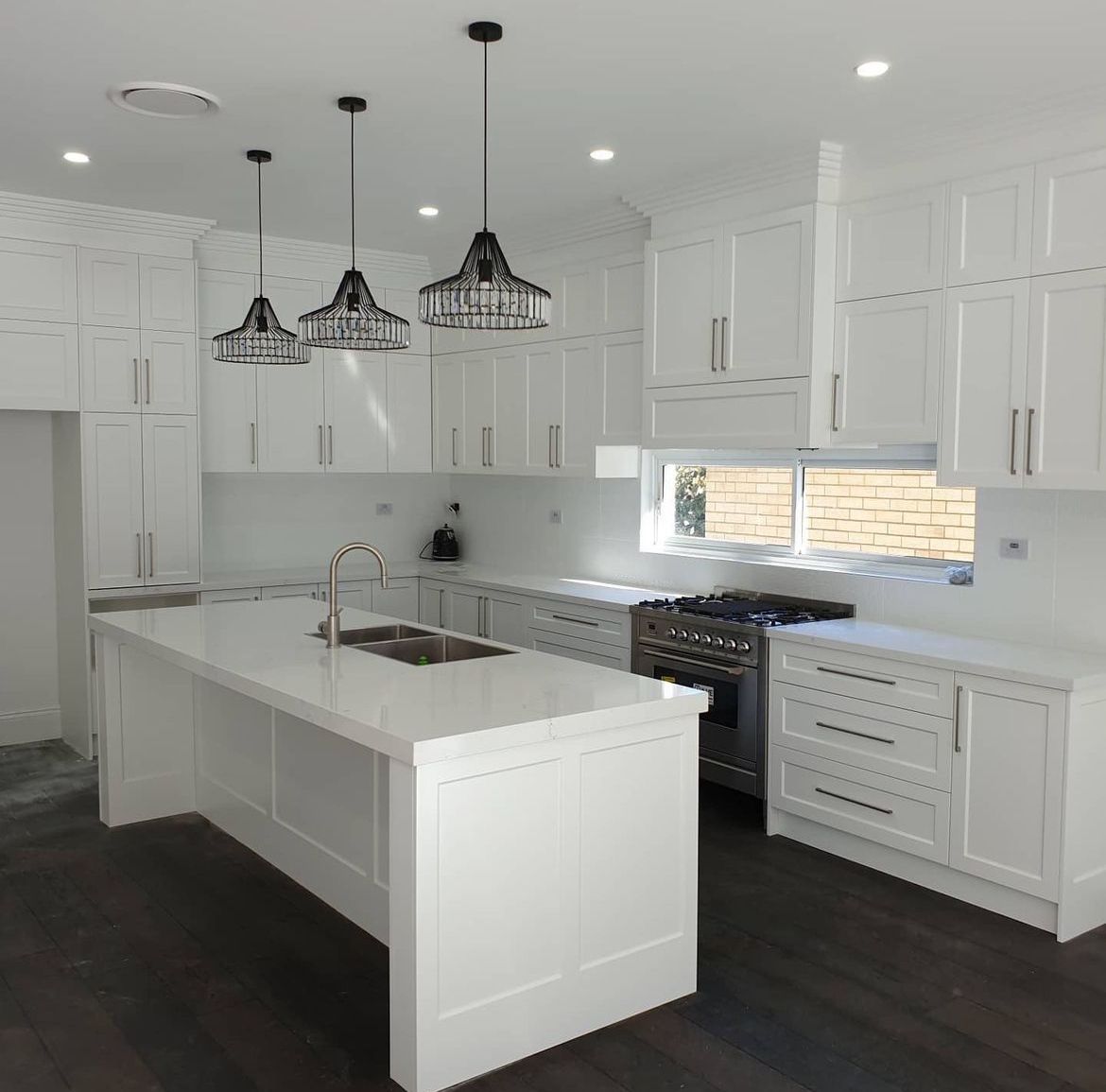
Flat pack kitchens use standard modules. In a rectangular room with typical appliance sizes, that can be an efficient way to refresh the space. Ranges are familiar, showroom displays are easy to compare, and lead times can be shorter when stock carcasses and doors are available.
They suit homeowners who want a straightforward replacement and whose walls, corners and ceiling heights behave. If your kitchen is already close to a standard grid, flat pack can cover a large share of the functional need.
Where Flat Pack Starts to Struggle
Problems appear when the architecture is irregular. Out-of-square walls, chimney breasts, unusual window reveals and non-standard appliance depths force fillers, awkward gaps or compromised storage. Those workarounds can erase the simplicity that made flat pack attractive.
Integrated looks are also harder when panel sizes and voids do not match the kit. A kitchen that needs a tall pantry beside a niche fridge, or an island with exact overhangs for seating, often outgrows modular constraints quickly.
- Irregular room shapes and older Sydney terrace walls
- Appliance models that do not match standard voids
- Desire for seamless floor-to-ceiling joinery
- Complex islands, banquettes or mixed-height benches
What a Custom Kitchen Offers
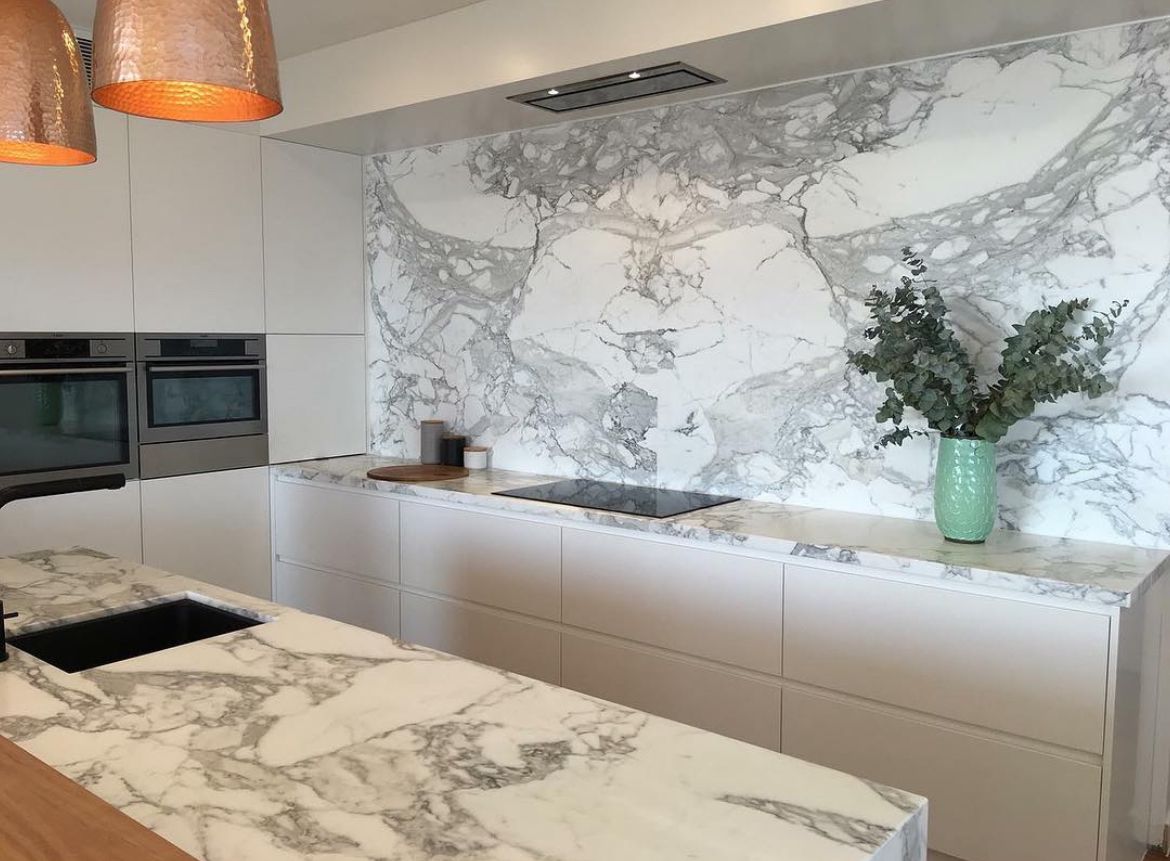
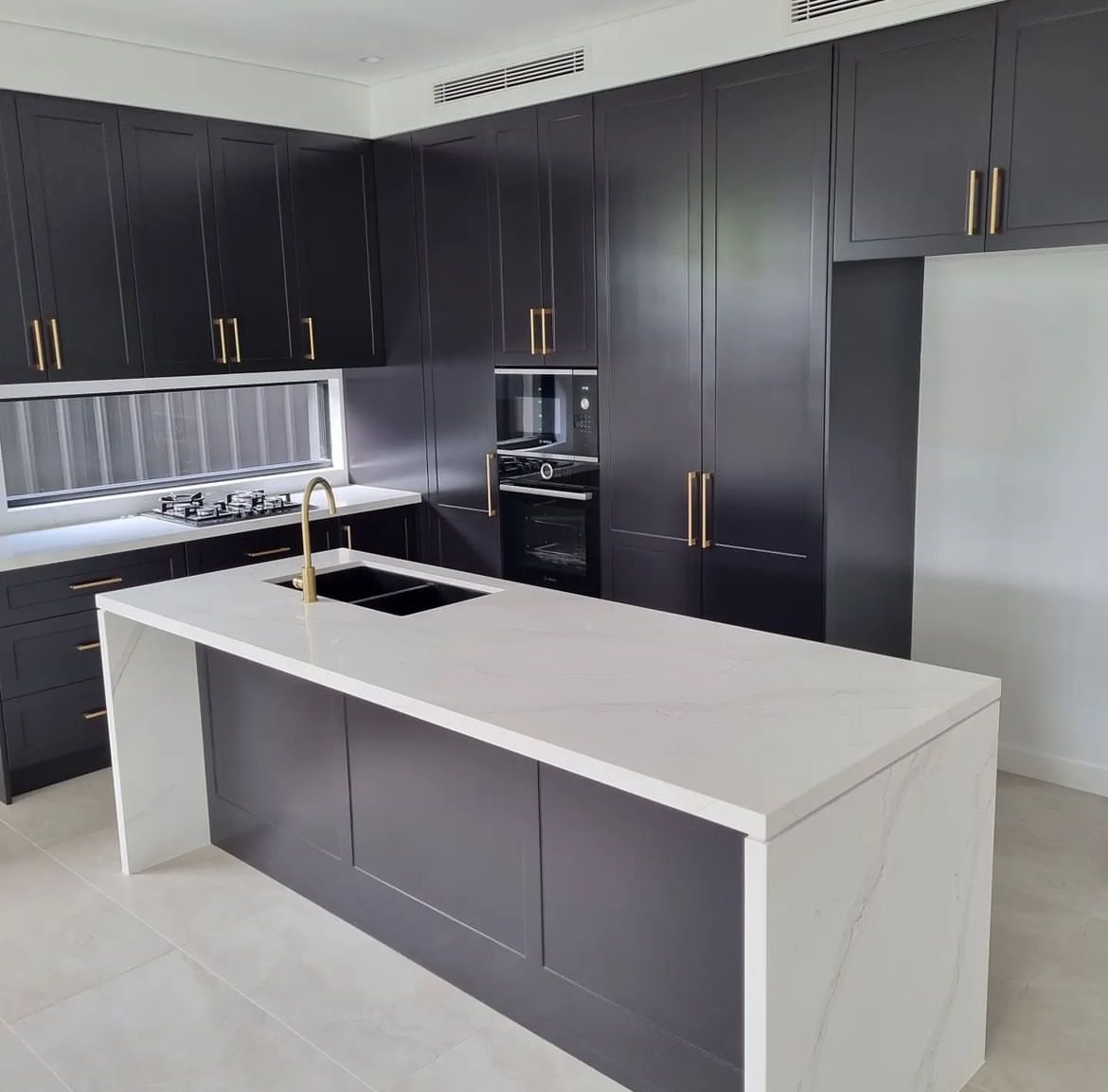
A custom kitchen is designed around the room and the household. Cabinetry widths, depths and internals can follow the architecture instead of forcing the architecture to follow a catalogue. That is the core advantage of custom cabinetry and joinery.
Custom also helps when storage habits are specific: baking zones, hidden appliance garages, pet feeding cupboards or laundry crossover storage in compact homes. The design conversation starts with use, then translates into joinery, not the other way around.
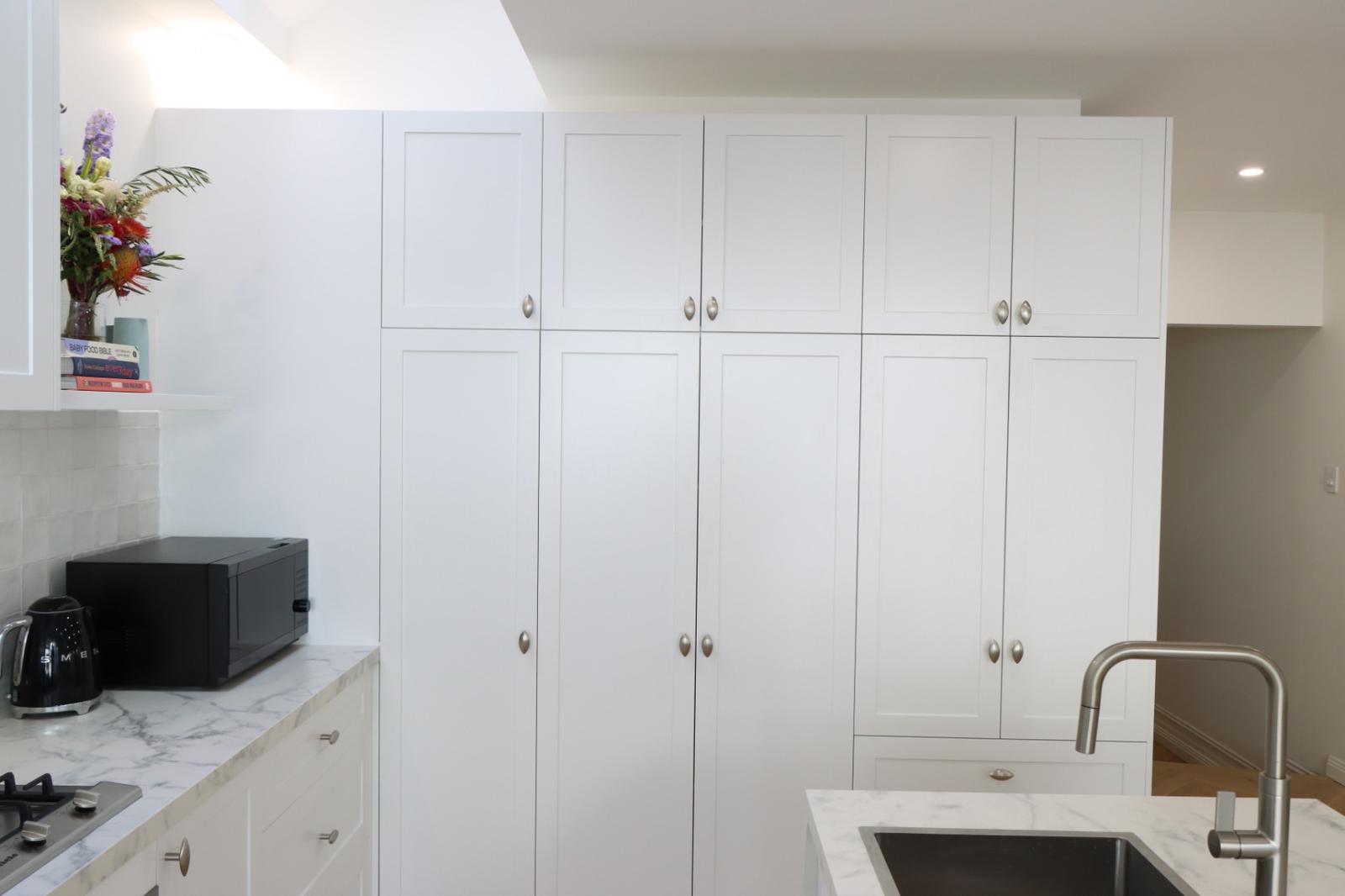
Reno Right focuses on custom kitchens when the home needs joinery tailored to the space. Explore the service at /custom-kitchens/.
Pros and Cons at a Glance
Flat pack strengths include familiar ranges, easier showroom comparison and a clearer path when the room is modular-friendly. Trade-offs include fillers, limited dimensional freedom and finishes that may not resolve every junction neatly.
Custom strengths include precise fit, stronger integration with the home’s architecture and storage designed around real habits. Trade-offs include a more detailed design process and lead times tied to manufacture rather than off-the-shelf collection.
How to Decide for Your Sydney Home
Ask whether standard modules can meet your layout without obvious compromise. If the answer is yes and your priorities are speed and simplicity, flat pack may be enough. If you are already sketching fillers, cut-downs or odd leftover spaces, custom is usually the cleaner long-term path.
Budget still matters, but it should be compared on outcomes. A cheaper kit that wastes space can cost more in daily frustration than a custom kitchen that uses every millimetre well. A consultation is the practical place to test both directions against your measured room.
If you are still shaping the wider remodel, pair this decision with the main kitchen renovations overview so joinery choice sits inside demolition, services, splashback and handover planning rather than as an isolated catalogue pick.
Bring appliance model numbers and a rough must-have storage list to the first meeting. Those details expose modular limits quickly. See /custom-kitchens/ for bespoke joinery and /kitchen-renovations/ for the full renovation process.
Key Takeaways
- Flat pack kitchens suit regular rooms and standard appliance sizes.
- Custom kitchens excel when the architecture or storage needs are specific.
- Fillers and gaps are a warning sign that modules are being forced.
- Compare options on fit and function, not catalogue price alone.
- Reno Right is set up to deliver custom kitchens when bespoke joinery is the better fit.
Frequently Asked Questions
Ready for your kitchen renovation?
Get a free quote and practical guidance from Reno Right for your Sydney kitchen project.